

Wad-Free Review: Is This Bed Sheet Detangler Worth It?
This Wad-Free review finds a clever product with a narrow but real use case: it may help households whose
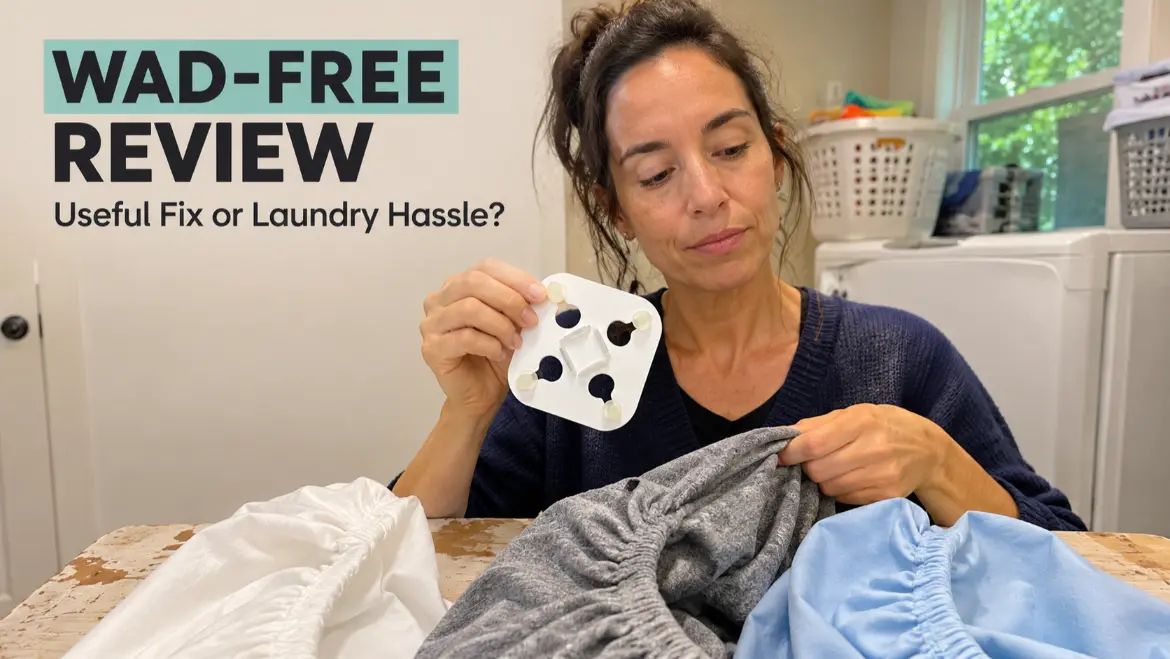
Table of Contents
This Wad-Free review finds a clever product with a narrow but real use case: it may help households whose sheets repeatedly twist, trap smaller laundry, or remain damp inside a bundle. The evidence is not uniform, however. One independent lab comparison measured only small time savings, while a long-term household reviewer reported consistently untangled loads. It is worth considering if sheet wadding is a frequent problem, but not if you use excluded fibers, high-spin routines, or want a guaranteed 75% faster dry.
Quick verdict: Wad-Free for Bed Sheets is best viewed as a reusable anti-tangling accessory—not a guaranteed energy-saving device. Its value depends on your sheet fabric, attachment technique, washer and dryer, load size, and how often wadding currently causes trouble.
Wad-Free Review at a Glance
| Decision factor | What readers should know |
|---|---|
| Product | Two reusable Wad-Free for Bed Sheets devices, enough for two individual sheets |
| Current official price | $19.99 per package as checked November 27, 2026 |
| Main purpose | Holds the four corners of each sheet closer together so the sheet is less likely to twist into a tight wad |
| Strongest potential benefit | Less tangling and fewer towels or pillowcases trapped inside a fitted sheet |
| Drying-time evidence | The manufacturer says “up to 75% faster”; Reviewed found a one-minute difference in its sheet-only comparison and a four-minute net saving in its fuller-load comparison |
| Fabric limits | Do not use with silk or rayon-family sheets, including products labeled viscose, modal, lyocell, Tencel, acetate, or many “bamboo,” eucalyptus, and beechwood sheets |
| Cycle limits | Follow the sheet’s care label; use low or medium spin, never high spin with the device |
| Main drawback | Attaching eight total corners for a flat-and-fitted set adds a step and can take practice |
| Our research-based verdict | Worth considering for recurring sheet wads; unnecessary for households that rarely have the problem |
This Wad-Free review is based on the current manufacturer instructions and policies, two independent published evaluations, textile guidance, and product-reference images. Review Staar did not run a hands-on laundry test, so we do not claim that a specific fabric will always stay attached or dry faster.
What This Wad-Free Review Covers
This Wad-Free review covers a rounded square base with four flexible locking tabs. You cover each tab with one corner of a sheet, push the fabric-covered tab through its corresponding hole, and slide it into the narrow channel. Once all four corners are secured, the sheet resembles a loose parachute rather than a free sheet that can twist around itself.
The package contains two devices—one for a flat sheet and one for a fitted sheet. The official product page says the base is polypropylene and the tabs are a custom thermoplastic elastomer. The manufacturer also states that the materials contain no latex, PVC, BPA, or phthalates.
Wad-Free became widely known as a Shark Tank laundry product, but the important question is not its television history. It is whether the extra attachment step solves a costly or irritating problem in your particular laundry routine.
Wad-Free Review: How Does the Device Work?
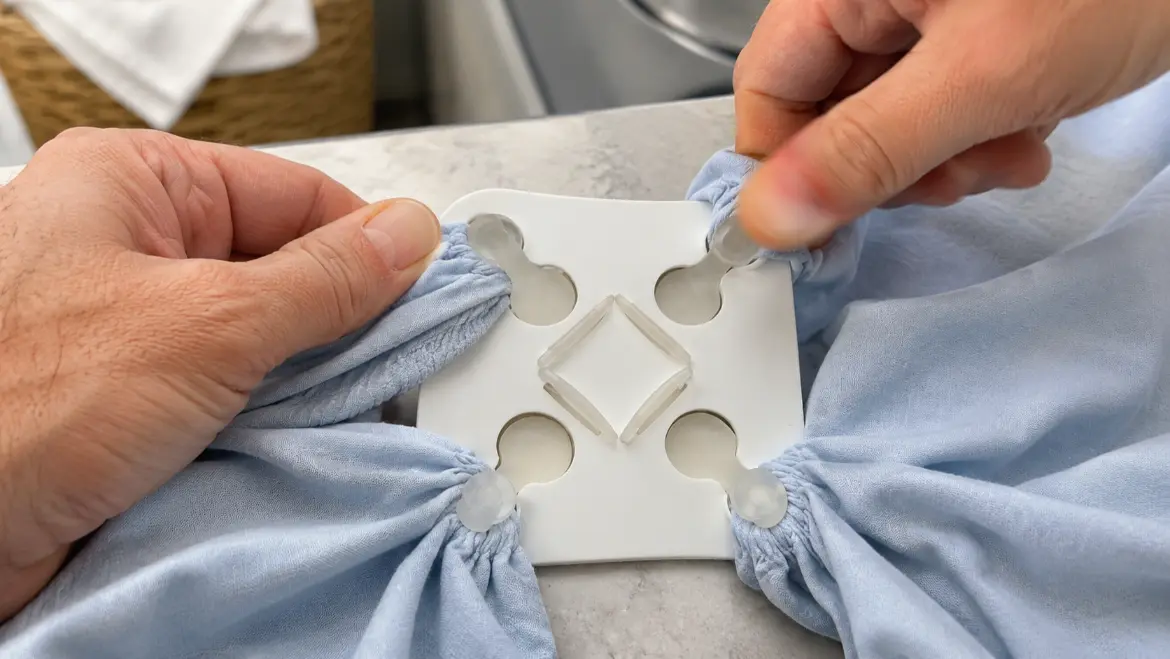
The mechanical explanation in this Wad-Free review is straightforward: the device does not absorb moisture, soften fabric, or mechanically shorten a dryer cycle. Its function is geometric, because keeping a sheet’s corners gathered can reduce its opportunity to form a long rope, closed pocket, or tight ball.
That may matter in two ways. First, a more open sheet can expose more surface area to circulating air. Second, it may be less likely to swallow pillowcases, towels, or clothing. Those mechanisms are plausible, but the size of the benefit varies because appliances, fabrics, load weights, cycle sensors, and attachment quality differ.
The official Wad-Free attachment guide says every sheet needs its own device. Users should check the tabs when moving laundry from washer to dryer, fluff each sheet back into a parachute shape, avoid overloading the appliance, and follow the appliance manufacturer’s loading instructions.
Wad-Free Review Evidence: Testing vs. Long-Term Use
This is where a careful Wad-Free review needs more nuance than a simple yes or no, and where this Wad-Free review gives the independent evidence more weight than advertising.
Reviewed found modest time savings
Reviewed compared loads in a washer-and-dryer lab. Its sheet-only load took 45 minutes without the product and 44 minutes with it. In the fuller load, drying took 88 minutes without it and 82 minutes with it, but the preceding wash ran two minutes longer. That produced a reported net saving of four minutes for the fuller load.
The device also reduced tangling and prevented items from becoming trapped inside the fitted sheet in those comparisons. However, one sheet corner came loose during each drying test, and the reviewers did not consider the modest time difference enough to justify the setup effort. Read the Reviewed laboratory evaluation for its exact load descriptions and results.
Bob Vila reported a better household experience
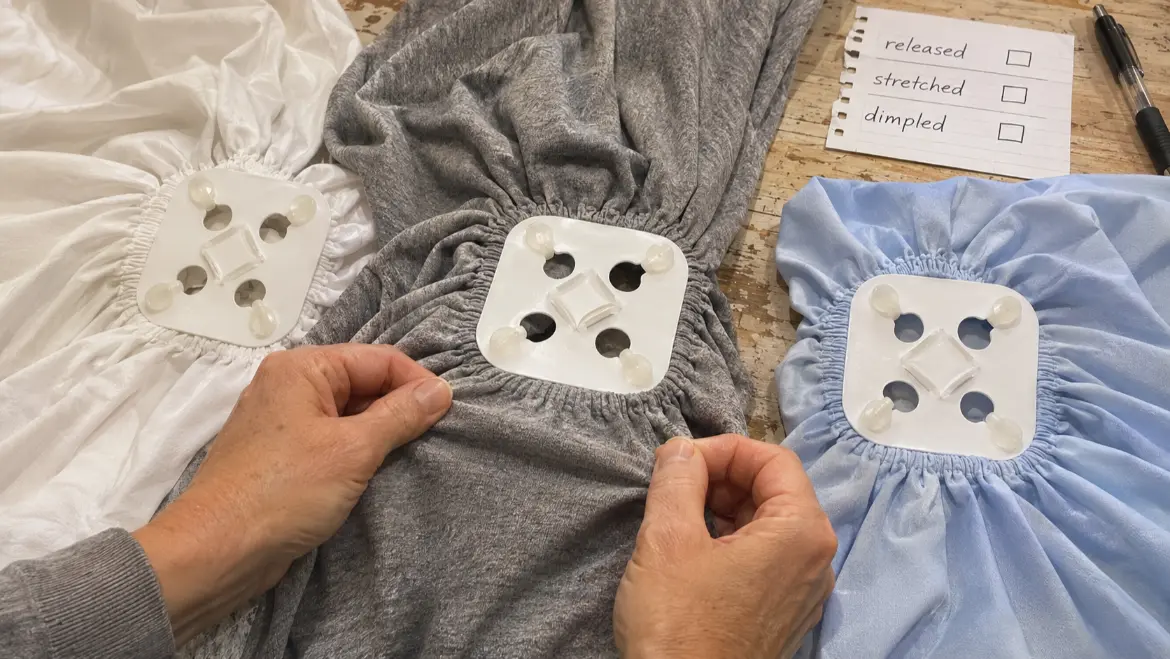
A Bob Vila contributor used the product for more than a year across more than 50 sets of sheets and reported that properly secured corners prevented tangled balls in her routine. She also described an initial learning curve, occasional early releases when too little fabric covered a tab, and small corner wrinkles or dimples.
That account used cotton percale sheets, so it is useful evidence for one household and fabric construction, not proof for jersey, microfiber, or every machine. The full Bob Vila long-term Wad-Free account explains the reviewer’s method and experience.
What the disagreement means
The two reviews do not necessarily cancel each other out. They used different machines, loads, durations, and success criteria. Reviewed asked whether the product created a meaningful measured advantage in a small controlled comparison. Bob Vila emphasized whether it prevented an annoying recurring outcome over many household loads.
For that reason, our Wad-Free review does not treat “up to 75% faster” as an expected result. “Up to” describes a possible upper bound, not a typical saving. Shoppers should value the product primarily for anti-tangling and item-entrapment prevention; any shorter drying time is a load-specific secondary benefit.
Wad-Free Review Fabric Check: Percale, Jersey, and Microfiber
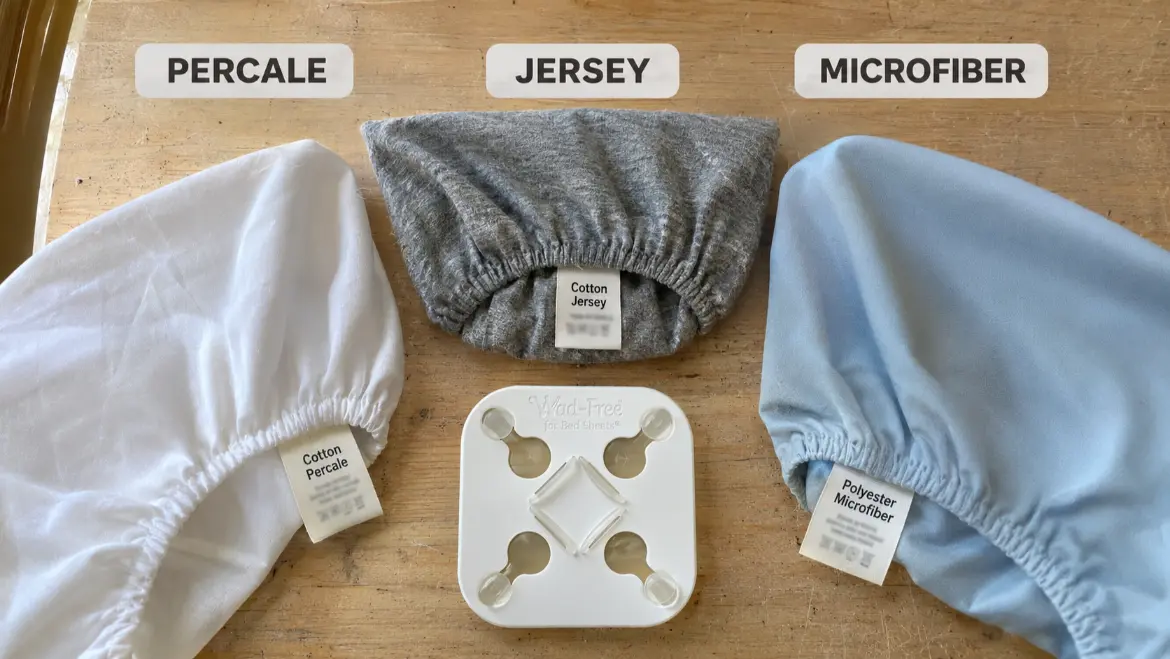
The fabric focus of this Wad-Free review goes beyond broad performance claims because construction deserves closer attention. The critical limitation is that neither the manufacturer nor the independent sources above publish a controlled, matched comparison of cotton percale, cotton jersey, and polyester microfiber.
We therefore cannot honestly declare that one fabric always stays clipped while another releases. The useful answer is a compatibility-and-risk screen based on fiber content, construction, sheet condition, and attachment behavior.
| Sheet type | Construction and likely fiber | Is it automatically compatible? | What to inspect during the first load |
|---|---|---|---|
| Cotton percale | A stable plain weave, often 100% cotton | No—confirm the sewn-in fiber and care labels, but cotton percale is not on the manufacturer’s exclusion list | Use enough fabric slack, check for a secure channel lock, then inspect for dimpling or a released corner at transfer |
| Cotton jersey | A knit construction with more stretch than woven percale | No—verify that it contains no excluded fiber and that its care label matches the permitted cycle | Avoid pulling the knit tight during attachment; watch for stretching, distortion, or fabric sliding out of a tab |
| Polyester microfiber | Usually very fine synthetic fibers in a lightweight fabric | No—confirm actual fiber content and care instructions | Check that thin or slick fabric fully covers each tab, remains seated after washing, and shows no localized stress |
The CottonWorks percale definition describes percale as a plain-woven fabric. Its jersey definition identifies jersey as a knit. That structural difference is relevant: knits generally stretch more, while a woven percale is more dimensionally stable. It does not, by itself, prove how Wad-Free will grip a particular finished sheet.
A practical three-fabric check readers can perform
If your fabric label is eligible, use a cautious first-load check rather than assuming the sheet name guarantees compatibility:
- Photograph the fiber-content and care labels.
- Examine all four attachment areas for thinning, holes, loose seams, or weakened elastic.
- Attach the device without stretching the corner tight; cover the open tab completely and leave fabric slack.
- Tug gently to confirm every covered tab is seated in its channel.
- Choose the care-label cycle and manually reduce spin if the washer defaults to high.
- Wash the sheet without an overloaded drum.
- At transfer, record whether zero, one, or more corners released and whether the attachment points stretched or dimpled.
- Reattach if needed, fluff the sheet, and use the label-approved dryer temperature.
- Stop using the device with that sheet if you see damage, progressive stretching, or repeated releases.
This does not create laboratory evidence, but it gives owners a safer, repeatable way to decide whether their exact percale, jersey, or microfiber sheet is a good match.
Wad-Free Review Safety Check: Read the Fiber Label
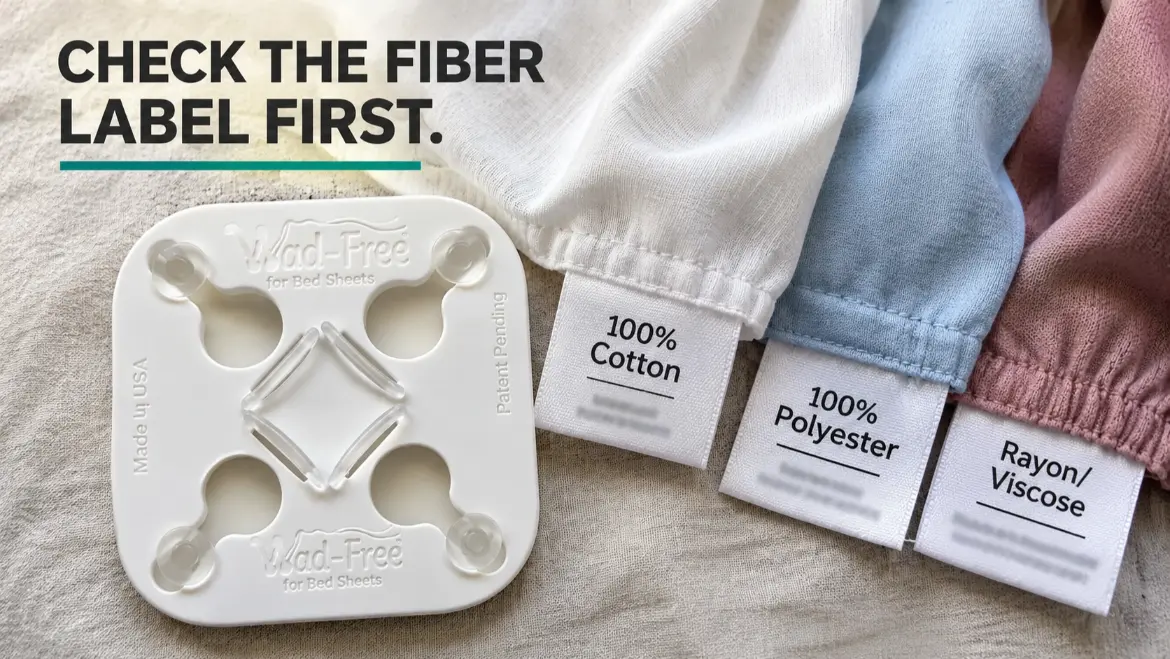
The most important safety point in this Wad-Free review is that the official instructions say not to use the device on sheets containing silk or rayon. The exclusion list includes viscose, modal, lyocell, acetate, and Tencel, as well as many sheets marketed using bamboo, eucalyptus, or beechwood language. It also excludes weakened, thinned, or damaged sheets.
Do not judge compatibility from the large marketing name on the package. Read the sewn-in fiber label. The Federal Trade Commission’s bamboo-textile guidance explains that soft textiles marketed as bamboo are commonly rayon or viscose made from bamboo. That makes the small fiber-content label especially important for this product.
This is also why a Wad-Free review should not simply say it works with “most sheets.” A buyer with cotton percale may have a straightforward path. A buyer whose “bamboo” sheets are labeled viscose should not use it at all, regardless of how carefully the tabs are attached.
Wad-Free Review Setup: How to Attach It Correctly
As this Wad-Free review found from both the instructions and independent reports, setup becomes simple after practice but is not completely intuitive on the first attempt.
- Slide one clear tab toward the center to release it.
- Place a sheet corner over the open tab, fully covering it with fabric and leaving generous slack.
- Push the fabric-covered tab through the round opening in the white base.
- Slide it into the narrow channel and tug the sheet gently to confirm it is locked.
- Repeat with the other three corners on the same sheet.
- Use the second device for the other sheet.
- Fluff each attached sheet before loading it.
For fitted sheets with thick elastic or deep pockets, the manufacturer recommends an alternate location along the corner-pocket seam, roughly where that pocket ends, rather than forcing thick elastic into the standard position. Check the current official guide because the right location depends on the sheet’s construction.
The manufacturer recommends gentle/delicate or normal washing with low or medium spin, cold or warm water, and low or warm drying when those settings agree with the sheet’s care label. Never use high spin with Wad-Free. The company clarifies that hot conditions do not necessarily damage the device itself; the concern is damage to fabric fibers and conflict with sheet-care instructions.
Wad-Free Review Advantages
The strongest advantages in this Wad-Free review relate to controlling the sheet’s shape rather than promising a fixed number of minutes saved.
It addresses both washing and drying
Dryer balls only operate freely inside the dryer. Wad-Free stays attached through the washer and dryer, so its intended role includes reducing twisting, off-balance loads, trapped items, and dryer wads across the complete routine.
One package covers a standard sheet set
The $19.99 package includes two devices, enough for one flat sheet and one fitted sheet. The product is reusable, and replacement tabs were listed separately on the official store at the time of our fact check.
Item entrapment may be the most credible benefit
Reviewed’s comparisons found no towels or pillowcases trapped inside the fitted sheet when the product was used. Even if time savings are small, avoiding a damp pillowcase hidden inside a sheet can still improve the laundry experience.
The design has no sharp clip teeth
The fabric wraps around a flexible tab rather than being bitten by a metal-toothed clamp. That does not eliminate all risk—thin or weakened material can still be stressed—but it avoids an obvious sharp edge at the attachment point.
Wad-Free Review Limitations and Common Failure Points
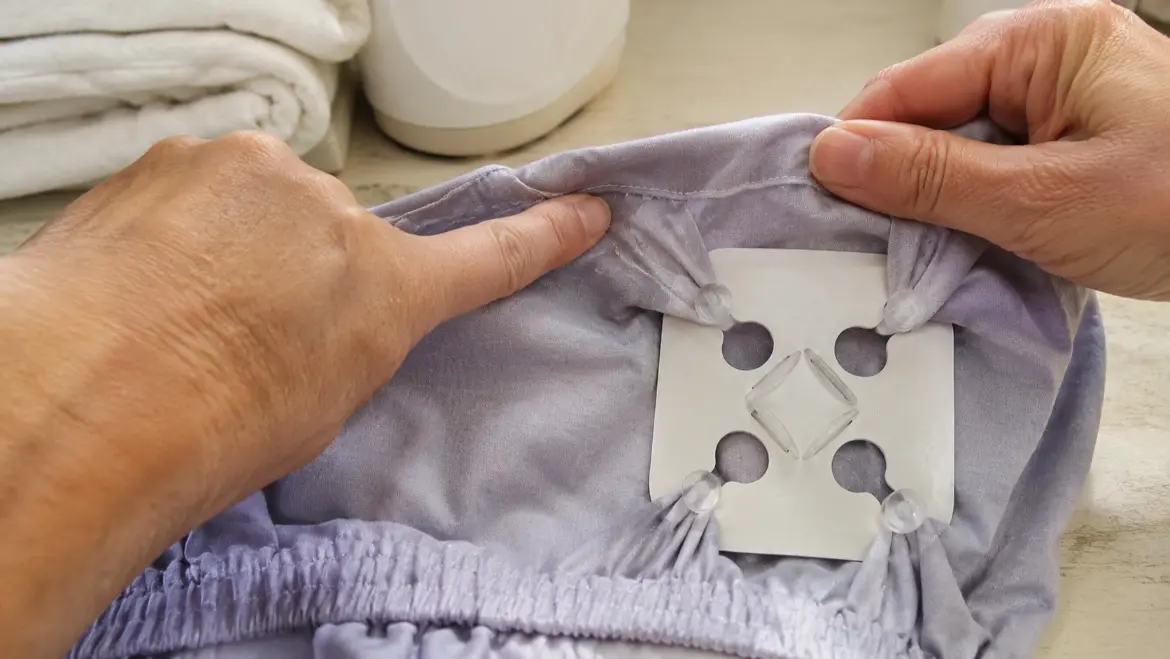
The limitations in this Wad-Free review can materially change whether the $19.99 purchase feels worthwhile.
Results vary by load and machine
The manufacturer itself says the product is not 100% effective in every load. A sensor dryer, older timed dryer, compact drum, large-capacity machine, mixed load, or sheet-only load can produce different outcomes.
It adds preparation time
For a two-sheet set, eight corners must be secured. Users who already dislike sorting or fastening laundry may not consider the anti-tangling benefit worth that repeated step.
Corners can release
Too little fabric, a tab that is not fully seated, high spin, stretch, or a difficult fitted-sheet edge may lead to a release. The official troubleshooting advice is to use adequate slack, confirm the lock, lower spin speed, and try the alternate seam location on deep-pocket fitted sheets.
It can leave small dimples
The manufacturer and Bob Vila both acknowledge that attachment points may show small dimples or crinkles. The brand suggests removing the device a few minutes before the sheet is completely dry if this bothers you, provided you can do so safely and follow the dryer instructions.
It is not a blanket or duvet device
Wad-Free for Bed Sheets has four tabs. The company sells a separate heavy-duty product for blankets and duvet covers. Do not treat the two models as interchangeable without checking the current instructions.
Wad-Free Review Price, Shipping, Returns, and Cost
At the time of this Wad-Free review, the official price was $19.99 for two bed-sheet devices. This Wad-Free review also confirmed that the official site advertised free economy shipping within the United States, with paid expedited choices available at checkout. International rates, duties, taxes, and availability depend on the destination and are calculated through the brand’s international checkout partner.
For direct US purchases, the current Wad-Free return policy allows a return within 30 days of receipt. The buyer generally pays tracked return shipping, proof of purchase is required, and products bought from another retailer must follow that retailer’s policy. Confirm the terms again before ordering because prices and policies can change.
The ownership cost is low if the devices last through many loads, but there is no universal payback calculation. A household that never reruns a damp load has little energy cost to recover. A household that frequently separates tangled sheets or extends drying cycles has more room to benefit.
Who This Wad-Free Review Says Should Consider It
The practical fit criteria in this Wad-Free review suggest Wad-Free may suit you if:
- your sheets regularly twist into a tight rope or ball;
- fitted sheets frequently trap pillowcases, towels, or clothing;
- your fabric labels do not list excluded fibers;
- you can use low or medium spin;
- you are willing to spend a minute or two attaching corners;
- reducing tangles matters more to you than achieving a specific drying-time claim.
Who This Wad-Free Review Says Should Skip It
Choose another approach if the following Wad-Free review limitations describe your routine:
- your sheets contain silk, rayon, viscose, modal, lyocell, Tencel, acetate, or excluded plant-source rayon;
- the sheet is worn, thinned, torn, or weakened;
- your required routine uses high spin or conflicts with the sheet-care label;
- your sheets rarely wad up in the first place;
- you do not want an attachment step every wash;
- you expect a guaranteed 75% reduction in drying time.
For occasional tangling, simpler changes may be enough: avoid overloading, wash bedding separately when practical, load the washer according to its manual, untangle and fluff sheets before drying, and stop the dryer to separate a bundle if your appliance permits it safely.
Wad-Free Review Verdict: Is It Worth It?
Our research-based Wad-Free review lands in the middle of the two prominent competitor verdicts. The product solves a recognizable mechanical problem, and both independent sources found at least some benefit. The disagreement is about consistency, size of benefit, and whether setup is worth it.
At $19.99, it is a reasonable experiment for an eligible household that repeatedly deals with sheet wads or trapped laundry—especially with the direct seller’s current 30-day US return window. It is not a broadly necessary laundry tool, and the manufacturer’s maximum drying claim should not be treated as a typical result.
Wad-Free Review FAQs
Does Wad-Free really dry sheets 75% faster?
The manufacturer says sheets can dry “up to 75% faster,” but that is not a guaranteed or typical result. Reviewed measured one minute of difference in its sheet-only drying comparison and a four-minute net saving across the wash-and-dry process for its fuller load. Your result can vary substantially.
Can I use Wad-Free on cotton percale sheets?
Cotton percale is not on the manufacturer’s excluded-fiber list, and Bob Vila’s long-term account involved percale sheets. Still, check the exact fiber content, care label, fabric condition, and cycle settings before use. “Percale” describes a weave, not a complete fiber label.
Can I use it on jersey or microfiber sheets?
Potentially, if the exact fiber label contains no excluded material and the care instructions match the permitted settings. No published head-to-head data establishes whether jersey or microfiber holds better. Monitor stretch, slippage, dimpling, and released corners during the first loads.
Can I use Wad-Free with bamboo sheets?
Usually not when the label says rayon or viscose made from bamboo. The manufacturer excludes rayon-family fibers. Check the sewn-in fiber label rather than relying on the front-of-package word “bamboo.”
Does one package handle a full sheet set?
Yes, for one flat sheet and one fitted sheet. Each sheet requires its own device, and the standard package contains two.
Can I use a high-spin wash cycle?
No. The official instructions say not to use high spin with Wad-Free. Select a low or medium spin that also complies with the sheet’s care label.
Can it damage sheets?
No attachment product is risk-free. The manufacturer says to avoid silk, rayon-family fibers, and damaged or weakened sheets. Small dimples can occur, and users should stop if they observe stretching, thinning, tearing, or repeated release at an attachment point.
Is Wad-Free the same as dryer balls?
No. Dryer balls tumble freely in the dryer. Wad-Free attaches to all four corners of a sheet and remains in place through washing and drying. The products use different mechanisms and should not be assumed to deliver equivalent results.
Final Wad-Free Review Verdict
Wad-Free is a targeted solution for a recurring nuisance, not a universal laundry upgrade. Its most persuasive value is keeping sheets more open and reducing trapped laundry. Drying-time savings are possible but inconsistent in the independent evidence available.
Buy it only after checking your fiber labels, sheet condition, and washer settings. If eligible sheets frequently emerge as damp bundles, the $19.99 two-pack may be worth trying. If your laundry already dries evenly—or your sheets contain excluded rayon-family fibers—skip it.
This article contains affiliate links. If you purchase through our links, we may earn a commission at no extra cost to you. We only recommend products we genuinely believe in. Read our Disclaimer for full details.